Should You Buy the Steam Machine or Build Your Own Gaming PC?
Is the Steam Machine worth it? Here is how Valve’s compact SteamOS gaming PC compares to building your own gaming PC.
Should You Buy the Steam Machine or Build Your Own Gaming PC?
Valve’s new Steam Machine has created a pretty simple question for PC players: should you buy the Steam Machine, or build your own gaming PC instead?
On paper, the answer sounds obvious. If you build your own PC, you can usually get better performance, more upgrade options, and more control over every part inside the system. But the Steam Machine is not trying to be a normal desktop tower. It is trying to be a small, living-room-friendly SteamOS gaming PC that feels closer to a console while still running Steam games.
That makes the comparison more complicated than just asking which one has the stronger graphics card.
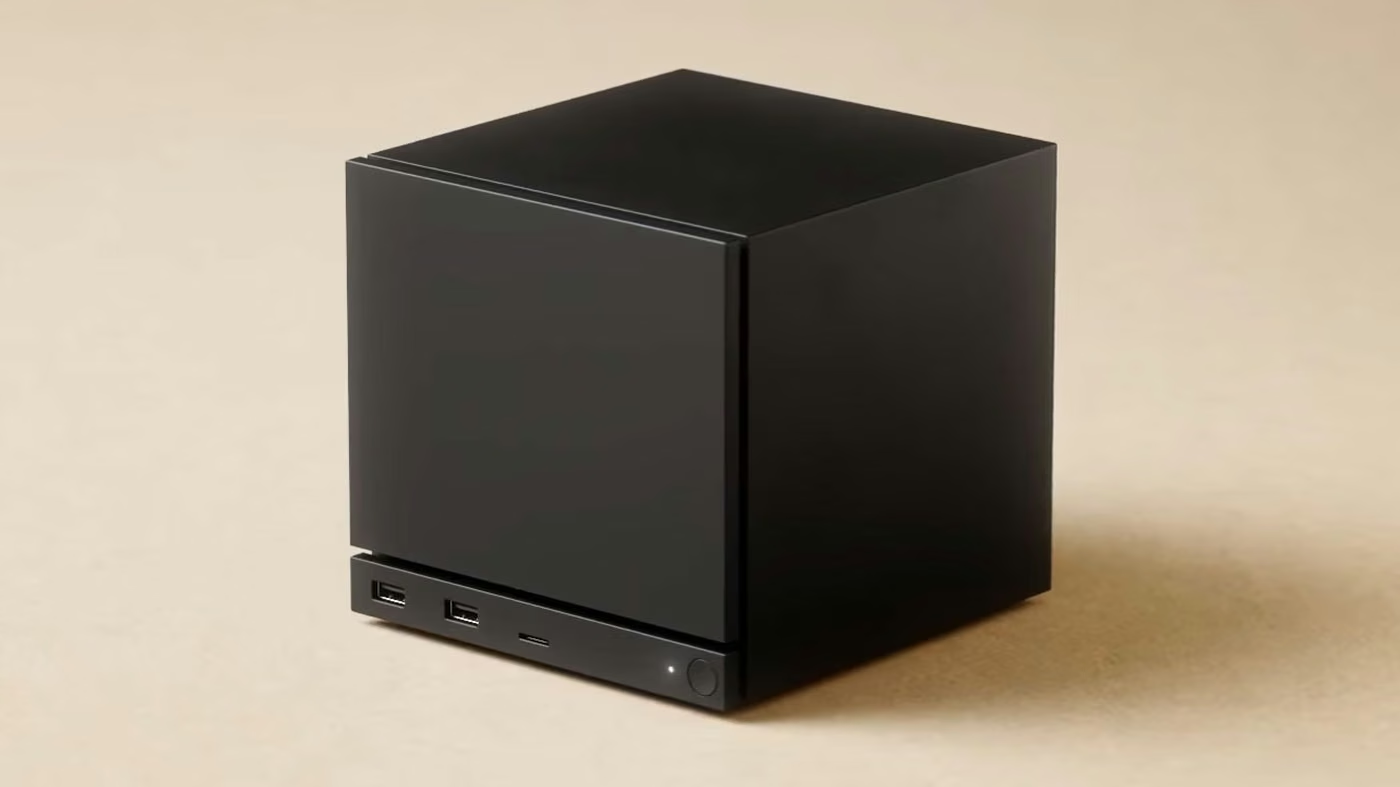
Image credit: Valve / Steam via Press Start
Steam Machine Specs at a Glance
The Steam Machine starts at around $1,049 for the base model. That gets you a compact SteamOS gaming box with a custom AMD Zen 4 CPU, a custom AMD RDNA 3 GPU with 8GB of VRAM, 16GB of DDR5 memory, and 512GB of NVMe storage.
The biggest selling point is not just the hardware. It is the form factor. The Steam Machine is built into a tiny cube-style design that is much smaller than most gaming PCs. It is meant to sit near a TV, work with a controller, and give PC players a more console-like way to access their Steam library.
That is the part you cannot easily copy with off-the-shelf PC parts.
Steam Machine Price: Why It Feels High
The main issue is the Steam Machine price. At over $1,000, the Steam Machine is much more expensive than a standard console. For players comparing it directly to a PlayStation or Xbox, that price can feel hard to justify.
But the Steam Machine is not being sold like a traditional console. Console makers often sell hardware at a loss or near cost because they expect to make money later through subscriptions, accessories, and software sales. Valve’s approach is different. The Steam Machine is more like a compact pre-built PC, and that means the pricing is closer to the current PC hardware market.
That matters because PC parts are expensive right now. RAM, SSDs, motherboards, and small-form-factor components can push prices up quickly. Once you try to build something similar in size and performance, the Steam Machine starts looking less overpriced than it first appears.
Steam Machine vs Gaming PC: Can You Build Something Faster?
Yes, you can build a faster gaming PC for around the same price, especially if you are willing to use a larger case.
A DIY build around the Steam Machine’s price can use a newer or stronger desktop GPU, more flexible cooling, a standard motherboard, and better upgrade paths. You may also be able to choose a bigger SSD, more RAM, or a better power supply depending on deals at the time.
The biggest advantage is performance per dollar. A custom desktop does not have to fit inside a tiny cube, so you are not paying as much for custom engineering, compact cooling, or a console-style design. That extra space makes the build easier, cheaper, and more powerful.
If your only goal is frame rate, a custom PC is the better choice.
Building Your Own Gaming PC Has Clear Advantages
Building your own gaming PC gives you more control. You can choose the exact CPU, GPU, case, storage, cooling, and power supply you want. If one part becomes outdated, you can upgrade it later instead of replacing the entire system.
That is one of the biggest strengths of PC gaming. A desktop PC is not locked to one hardware configuration forever. You can swap the graphics card, add more storage, replace the cooler, upgrade the CPU, or move the whole build into a new case.
A DIY PC can also run whatever operating system you prefer. You can use Windows, SteamOS, Bazzite, or another Linux-based gaming setup. SteamOS support is becoming more flexible, especially for AMD-based PCs, but a custom build still gives you more freedom overall.
For players who already understand PC hardware, the Steam Machine may feel too limited for the price.
But Building Your Own PC Has Trade-Offs
The downside is that building a PC takes effort. You have to choose compatible parts, compare prices, assemble the system, install the operating system, configure drivers, and troubleshoot anything that goes wrong.
That is not a small thing for everyone.
A DIY build can also become more expensive than expected. A cheaper case, cheaper cooler, or cheaper power supply might save money, but those choices can affect noise, reliability, temperatures, and future upgrades. Small-form-factor builds are even harder because compact cases usually cost more, cooling is tighter, and cable management can be frustrating.
So while a DIY PC can be faster, it is not always easier.
Is the Steam Machine Worth It?
The Steam Machine is worth it for a very specific type of player: someone who wants a compact, pre-built SteamOS gaming PC for the living room.
That is the key point. If you want a normal desktop PC, build your own. If you want the best performance for your money, build your own. If you enjoy choosing parts and upgrading hardware, build your own.
But if you want a small machine that is already designed around Steam, controller use, sleep/resume features, TV play, and a cleaner console-style setup, the Steam Machine has a real purpose.
It is not the most powerful gaming PC you can get for the money, but it is also not trying to be a giant desktop tower.
Steam Machine vs Console: Where It Struggles
The hardest comparison for the Steam Machine is not always a DIY PC. It is the console sitting next to it.
A PlayStation or Xbox is cheaper, simple to use, and built around the living room from day one. You plug it in, sign in, and play. For many players, that is enough.
The Steam Machine has a different appeal. It gives you access to your Steam library, PC game prices, mods in some games, broader software flexibility, and no traditional console subscription requirement for online play.
But it still costs more, and it will not feel as simple as a traditional console for every user.
That puts it in a strange middle ground. It is more flexible than a console, but less flexible than a full DIY PC.
Who Should Buy the Steam Machine?
You should consider the Steam Machine if you want a small pre-built gaming PC, already like the Steam ecosystem, and want something that fits neatly into a living-room setup.
It is also a good option if you do not want to build a PC yourself. The Steam Machine removes the stress of picking parts, assembling the system, and troubleshooting the first boot.
But you should build your own gaming PC if you care more about raw performance, long-term upgrades, cheaper repairs, and getting the best hardware for your budget.
The DIY route is better for performance. The Steam Machine is better for convenience.
Final Verdict: Should I Buy the Steam Machine?
The Steam Machine is not the best value if you only care about power. A custom gaming PC can beat it in performance, and a larger desktop build will usually give you more upgrade options for the money.
But the Steam Machine is not pointless. Its value comes from size, simplicity, SteamOS integration, and the fact that it is a ready-made living-room PC. That combination is harder to recreate than it looks.
So the answer depends on what kind of player you are.
If you want the strongest gaming PC for around $1,000, build your own. If you want a compact Steam box that works more like a console and saves you the trouble of building, the Steam Machine makes sense.